
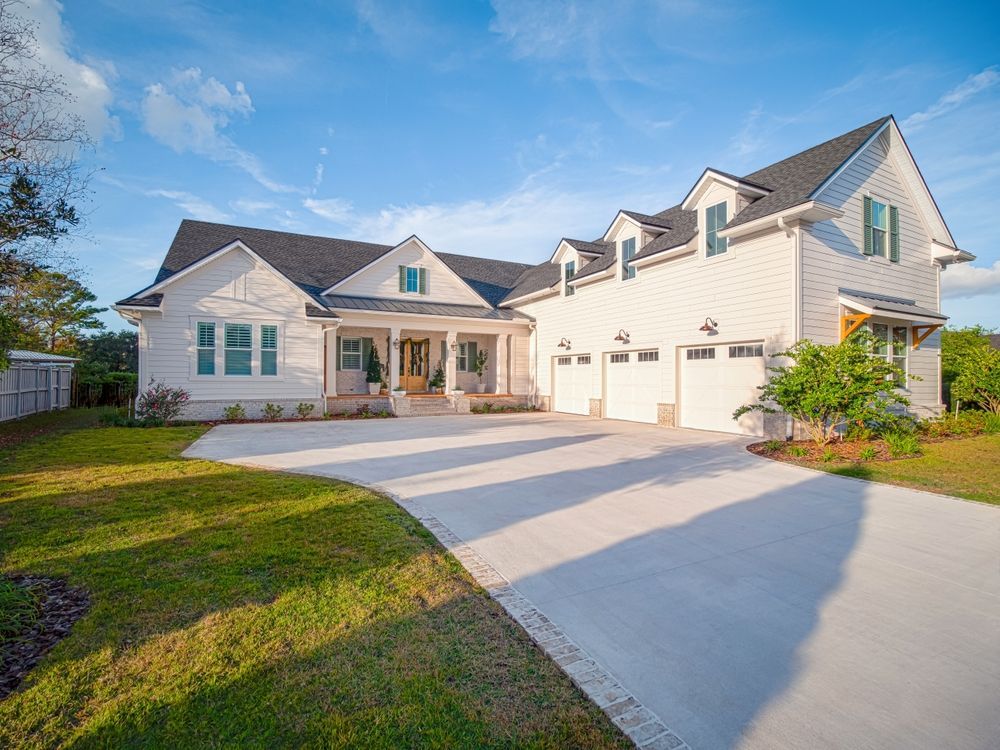
Access Roads Built for Seasonal Weather
Driveway Installation in Jacksonville for new builds and improved property access
In East Texas, driveways either maintain their surface through wet and dry cycles or deteriorate into rutted tracks that require constant regrading. New driveway construction for residential and rural properties involves grading the route, preparing a compacted base, and placing surface material that distributes vehicle weight without displacement during rain. Rock Hound Land and Construction Services, LLC builds driveways designed for durability and long-term use across Jacksonville properties where soil conditions shift between dry-season hardness and wet-season saturation.
The process includes evaluating the route for drainage flow, excavating to remove unstable topsoil, building up a base layer that sheds water, and topping with gravel or crushed stone sized to lock together under traffic. Where drainage crosses the driveway path, culvert installation prevents water from washing out the roadbed and creating impassable sections during storms.
Arrange custom driveway planning to review your property access needs and confirm material specifications.
What Changes After Base Preparation Completes
Driveway construction establishes a crowned or sloped surface that sheds water to the sides rather than allowing it to pool in wheel tracks, using base material compacted in layers to prevent settling that creates low spots. Material placement involves gradation that allows smaller particles to fill voids between larger stones, creating a surface that resists displacement when vehicles turn or brake.
After installation, you see a driveway that remains firm during wet weather, doesn't develop ruts that trap water, and maintains a consistent surface grade from entrance to destination. The base layer thickness depends on soil bearing capacity and expected traffic loads, with rural properties often requiring deeper bases where heavy equipment will travel compared to driveways serving only passenger vehicles.
Driveway projects vary based on total length, elevation changes along the route, and whether culverts or turnaround areas need to be incorporated into the design. Some installations benefit from geotextile fabric beneath the base layer to prevent soft subgrade soil from mixing upward into the stone, which weakens the structure over time.
Questions Before Starting Your Project
Property owners planning new driveways typically want to understand material choices, construction methods, and long-term maintenance requirements.
What base preparation is required before surface material goes down?
Topsoil and organic material must be removed, and the remaining subgrade compacted to create a stable foundation that doesn't compress unevenly under the weight of base layers.
How does material choice affect driveway performance in Jacksonville?
Crushed limestone or granite with angular edges compacts tighter than rounded river gravel, creating a surface less prone to shifting, which matters during the wet conditions common in East Texas.
What width is needed for rural property driveways?
Single-lane driveways typically run 10 to 12 feet wide with periodic turnarounds, while two-lane access roads require 18 to 20 feet to allow vehicles to pass without leaving the prepared surface.
Why does crown or slope matter for driveway longevity?
A center crown or cross-slope of one to two percent directs water off the surface before it saturates the base, preventing the freeze-thaw or saturation cycles that cause rutting and washouts.
When should culvert installation happen relative to driveway construction?
Culverts are installed first, then incorporated into the driveway base and surface layers so the roadway above them is properly supported and graded for drainage.
Rock Hound Land and Construction Services, LLC tailors driveway construction to your property's terrain and intended use, including coordination with culvert work where drainage requires it. Request an estimate based on your site conditions and access requirements.